This website is dedicated to the science and conservation of the world’s largest coral atoll containing some of the world’s healthiest coral reefs and the cleanest sea water tested so far in the world. Where and what is the Chagos?
The Chagos has the world’s largest coral atoll and 55 tiny islands in quarter of a million square miles of the world’s cleanest seas. It is by far Britain’s greatest area of marine biodiversity. Now, before it is too late, there is an opportunity to save this precious natural environment, creating a conservation area comparable with the Galapagos or the Great Barrier Reef.
Please support this planet-saving project and encourage the British Government to make it a reality.
The cleanest sea water in the world. Pollutant levels in Chagos waters and marine life are exceptionally low. Analyses in 1996 suggested that “The marine environment of the Chagos Archipelago as a whole is exceptionally pristine” and was the cleanest water tested so far in the world.
What’s so special about the Chagos environment? The Chagos contain some of the world’s healthiest coral reefs and the world’s largest surviving coral atoll. Scientists fear that half of the world’s coral reefs could be lost by 2025. It is essential to save them: hundreds of millions of people in the world depend on healthy reefs in one way or another. Living reefs provide food, protect beaches from erosion and form a treasure house of genetically diverse creatures and plants.
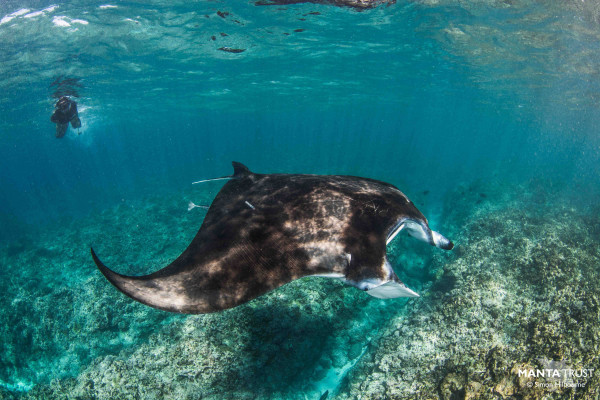
The wildlife biodiversity of Chagos is very rich. It provides at least 220 coral species and over 1000 species of fish in a surviving stronghold. It is also a refuge and breeding ground for large and important populations of sharks, dolphins, marine turtles, rare crabs, birds and other vulnerable marine and island species. In marine terms BIOT is by far the most bio-diverse part of the UK and its Overseas Territories. 
Our New 2009 Booklet is now available.
|